Knee pain on stairs, stiffness after sitting, swelling, or a shrinking walking distance can come from arthritis, but an X-ray alone cannot prove that arthritis is the main cause. You will learn how clinicians identify the source, what to track during nonsurgical treatment, and when injections or surgery deserve a careful comparison.
Key takeaways
- Match pain and walking difficulty with examination findings, not X-ray wear alone.
- Use a defined nonsurgical trial with measurable goals for pain and walking.
- Compare medicines, injections and joint-preserving treatments by risks and likely benefit.
- Discuss surgery when pain and daily limitations persist despite appropriate treatment.
Is Knee Arthritis Really Causing the Pain and Walking Trouble?
Knee arthritis is more likely when pain builds gradually, worsens with weight-bearing, and causes knee arthritis symptoms such as pain on stairs, pain rising from a chair, or start-up pain after sitting. An X-ray showing wear does not prove arthritis is causing the trouble; the examination, walking pattern, function, and response to treatment must match.
| Condition | Clues that point toward it |
|---|---|
| Knee arthritis | Gradual pain, brief start-up stiffness, reduced extension, grinding, activity-related swelling, and increasing walking limits |
| Meniscus tear | A twisting injury followed by joint-line pain, catching, or locking |
| Ligament injury | A clear injury with immediate swelling or repeated giving-way, especially during turning |
| Hip arthritis | Groin or thigh pain, reduced hip rotation, and knee pain without convincing knee findings |
| Bursitis | Tenderness over the inner knee or kneecap, worse when kneeling or pressing the area |
| Gout | Sudden severe pain, redness, heat, and marked swelling over hours or a day |
| Spine-referred pain | Back pain, burning or tingling, numbness, or weakness extending below the knee |
Arrange an evaluation when pain disturbs sleep, walking distance is shrinking, you need a stick or railing, the knee buckles, swelling recurs, or stiffness limits daily tasks. Seek prompt assessment for sudden inability to bear weight, fever with a hot swollen knee, new deformity, or calf swelling with shortness of breath.
How Clinicians Confirm the Cause of Knee Pain
A knee arthritis diagnosis begins with your history. The clinician asks where the pain starts, when it appears, whether it follows an injury, and how it affects stairs, rising from a chair, sleep, and walking distance.
Pain from the hip or lower back can feel like knee pain, so the examination may include those areas too.
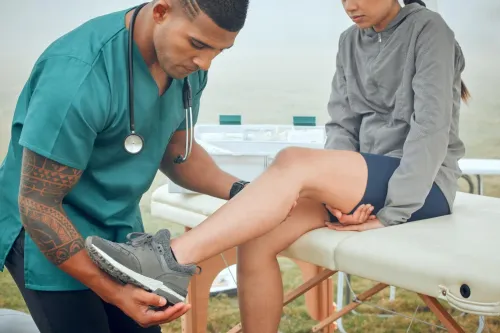
During a walking examination, the clinician watches for a limp, reduced knee bend, instability, and an inward or outward leg alignment. The physical assessment also includes:
- Knee range of motion, especially whether you can fully straighten it
- Tenderness along the joint line and kneecap
- Swelling, warmth, muscle weakness, and ligament stability
- Pain during bending, straightening, or weight-bearing
The tests answer different questions:
| Test | Useful information | Important limit |
|---|---|---|
| Standing weight-bearing X-ray | Shows joint-space loss, bone spurs, alignment, and deformity under load | Arthritis on the image does not prove it causes your pain |
| Blood tests | Help assess infection, gout, or inflammatory arthritis when swelling, warmth, or other findings raise concern | They do not diagnose ordinary osteoarthritis |
| MRI | Shows meniscus, ligament, cartilage, bone-marrow, or stress-injury problems when the examination and X-ray do not explain symptoms | It is not routinely needed to confirm typical arthritis |
Clinicians match the scan with your symptoms, examination findings, and walking limitation before recommending treatment. A normal or mildly abnormal X-ray does not dismiss severe symptoms, while advanced changes without pain do not automatically justify surgery.
What a Useful Nonsurgical Treatment Trial Looks Like
A useful trial has a plan, measurable goals and a review date, not sporadic treatment whenever pain becomes severe. Agree on activities that currently matter, such as walking 20 minutes, climbing stairs or rising from a chair, then record pain, stiffness, walking distance and reliance on a stick.
- Complete quadriceps strengthening, hip strengthening, range-of-motion exercises and low-impact aerobic activity, such as cycling or swimming. A physiotherapist can adjust the load if pain or weakness prevents safe exercise.
- Set a physiotherapy frequency you can maintain, such as weekly supervised sessions at first plus prescribed home exercises between visits. Inconsistent exercise makes the treatment impossible to judge.
- If you are overweight, include weight loss in the plan. Any loss can help; losing about 10% of body weight tends to provide more benefit than losing about 5%.
- Use agreed pain relief, footwear or a walking aid when appropriate, rather than stopping all movement because the knee hurts.
Assess the programme for about 6 to 12 weeks, with an earlier review if symptoms worsen or exercises are unsafe. Judge progress by function: longer walks, easier stairs, less start-up stiffness and fewer night symptoms matter more than a single good day.
Relief is not reversal. Nonsurgical care can reduce pain, improve movement and build supporting muscles, but it does not regrow worn cartilage or erase arthritis from an X-ray. Knee arthritis remains present even when you walk comfortably; symptoms returning after stopping the programme signals loss of control, not necessarily new structural damage.
How to Compare Medicines, Injections and Joint-Preserving Options
Topical medicines and injections aim to control symptoms; surgery changes the joint or its alignment. The right choice depends on how much pain limits walking, which compartments are damaged, and whether you need short-term relief or a durable mechanical solution.
| Option | Expected benefit and duration | Risks and rehabilitation | Joint status |
|---|---|---|---|
| Topical diclofenac | Local pain relief; use is ongoing while it helps. | Skin irritation and less systemic exposure than tablets; no surgical rehabilitation. | Preserves the joint. |
| Oral NSAIDs | Stronger whole-body pain and inflammation relief; benefit lasts while taken. | Oral NSAID risks include stomach bleeding, kidney injury, cardiovascular problems, drug interactions, and age-related concerns. | Preserves the joint. |
| Corticosteroid knee injection | Relief from pain and stiffness is usually short term, helping you exercise. | Infection, temporary blood-sugar rise, and repeated-injection concerns; little rehabilitation. | Preserves the joint. |
| Hyaluronic acid injection | Average benefit is limited or inconsistent; ask what duration the clinic expects. | Injection pain, swelling, cost, and inconsistent effectiveness; no rehabilitation. | Preserves the joint. |
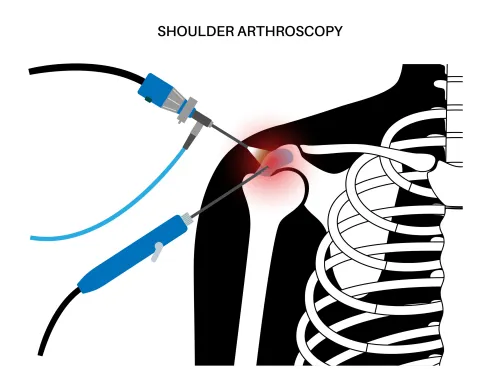
| Arthroscopy | Lavage or “debridement” does not meaningfully improve uncomplicated arthritis over nonoperative care. | Surgical infection, clots, and recovery time without a reliable payoff. | Preserves, but does not restore, the joint. |
| Osteotomy | Realigns a loaded compartment and can delay replacement in selected patients. | Bone-healing problems and months of rehabilitation; activity restrictions are substantial. | Preserves the joint. |
| Unicompartmental replacement | Replaces one damaged compartment, often supporting a quicker recovery than total replacement. | Loosening, wear, and progression of arthritis can require further surgery. | Partly replaces the joint. |
Osteotomy and unicompartmental replacement require disease mainly in one compartment, suitable ligaments, and a correctable deformity. X-ray severity alone does not make arthroscopy or replacement the best choice.
When Persistent Limitations Make Surgery Worth Discussing
Surgery is worth discussing when knee pain or stiffness limits sleep, work, stairs, shopping, or personal care despite a properly followed treatment plan. An X-ray that looks “severe” is not enough; the decision depends on how closely the image matches your symptoms and examination.
- Pain that persists despite exercise therapy, weight management, suitable medicines, or an appropriate injection
- Difficulty walking that limits distance, causes repeated buckling, or makes you depend on a stick or railing
- Fixed loss of straightening, worsening bow-leg or knock-knee deformity, or loss of essential daily activities
A specialist assessment should review your walking pattern, range of motion, alignment, strength, medical conditions, medicines, and goals. Standing weight-bearing X-rays help show joint-space loss and deformity; blood tests or MRI are useful when infection, inflammatory arthritis, a fracture, or another pain source remains possible.
Dr Gaurav Gupta can use this information to compare knee replacement with continued nonsurgical care, partial replacement, or other options.
Ask specifically about knee replacement risks, including infection, blood clots, stiffness, persistent pain, instability, nerve or blood-vessel injury, and revision surgery. Total knee replacement recovery involves early mobilisation, wound care, exercises, and progressive strength work over weeks to months.
Pain and walking usually improve, but kneeling, stairs, high-impact activity, numbness near the scar, or some stiffness may remain; recovery depends on rehabilitation, general health, and realistic goals. Sudden inability to bear weight, fever with a hot swollen knee, calf swelling, or breathlessness needs urgent assessment, not routine surgical planning.
Related services
Knee Arthritis Treatment Knee arthritis is a degenerative condition that leads to joint pain, swelling, and difficulty in movement. Dr. View service → |
Knee Arthroscopy Treatment Knee arthroscopy is a minimally invasive surgical procedure used to diagnose and treat various knee joint problems. View service → |
Frequently asked questions
How can you tell whether knee arthritis is causing pain and walking trouble?
Gradual pain that worsens with weight-bearing, pain on stairs, pain rising from a chair and start-up pain support arthritis, but the examination, walking pattern, function and treatment response must also match.
How do clinicians confirm the cause of knee pain?
Clinicians combine your history with a knee examination, walking assessment, functional limitations and imaging such as X-rays. An X-ray showing wear alone does not prove arthritis is causing the symptoms.
What should a useful nonsurgical knee arthritis treatment trial include?
It should use a defined treatment plan with clear goals, such as less pain on stairs, longer walking distance or easier chair rises, followed by a review of the results.
How do medicines, injections and joint-preserving options compare?
Compare each option by the expected pain relief, effect on walking and daily activities, risks, duration of benefit and whether it addresses the underlying joint problem.
When is knee replacement surgery worth discussing?
Discuss surgery when persistent pain and loss of function interfere with daily activities despite appropriate nonsurgical treatment, and examination and imaging support advanced joint damage.